A saubere Bank , auch bekannt als Laminar-Flow-Schrank, bietet einen lokalen Bereich gefilterter, partikelfreier Luft, der empfindliche Materialien oder Proben vor Kontamination schützt. Im Gegensatz zu einem vollständigen Reinraum, der einen gesamten Raum konditioniert, bietet eine Reinraumbank eine gezielte Reinigung auf der Ebene des Arbeitsbereichs und ist damit eine praktische und kostengünstige Lösung für Labore, Produktionslinien und Forschungseinrichtungen, die nur an einem bestimmten Arbeitsplatz eine sterile Umgebung benötigen. In diesem Artikel wird erklärt, wie saubere Bänke funktionieren, wo sie eingesetzt werden und welche Faktoren bei der Auswahl am wichtigsten sind.
Wie eine saubere Werkbank einen sterilen Arbeitsplatz schafft
Bei einer Reinraumbank wird die Raumluft durch einen Vorfilter und anschließend durch einen hocheffizienten Partikelluftfilter (HEPA) geleitet, der luftgetragene Partikel bis in den Submikronbereich entfernt. Die gefilterte Luft wird dann in einem glatten, gleichmäßigen Strom, der sogenannten laminaren Strömung, über die Arbeitsfläche geleitet, wodurch Partikel kontinuierlich aus dem Arbeitsbereich weggespült werden, anstatt ihnen ein Absetzen oder Zirkulieren zu ermöglichen. Dieser konstante, unidirektionale Luftstrom unterscheidet eine Reinraumbank von einem einfachen Filtergehäuse und gewährleistet eine zuverlässige Kontaminationskontrolle während der aktiven Arbeit.
Horizontaler versus vertikaler Luftstrom
Saubere Bänke werden im Allgemeinen entweder mit horizontalen oder vertikalen Luftstrommustern gebaut. Bei einem Horizontalströmungstisch bewegt sich die gefilterte Luft von der Rückseite des Geräts in Richtung des Bedieners, was einen hervorragenden Produktschutz bietet, die Luft jedoch in Richtung des Benutzers leitet, wodurch sie für den Umgang mit gefährlichen Materialien weniger geeignet ist. Bei einer Vertikalströmungsbank strömt die Luft von der Oberseite des Schranks nach unten auf die Arbeitsfläche und bietet so eine ausgewogenere Anordnung, die viele Einrichtungen für den allgemeinen Laborgebrauch bevorzugen.
HEPA-Filtrationseffizienz
Die in Reinstbänken verwendeten HEPA-Filter fangen typischerweise Partikel mit einer Größe von nur 0,3 Mikrometern mit einem Wirkungsgrad von 99,97 % oder mehr auf. Dieser Grad der Filterung ermöglicht es sauberen Laboren, die niedrigen Partikelzahlen beizubehalten, die für sensible Anwendungen wie Zellkulturen und mikrobiologische Arbeiten erforderlich sind, bei denen selbst geringe Kontaminationsmengen die Ergebnisse beeinträchtigen können.
Wo häufig saubere Bänke verwendet werden
Reinraumbänke dienen einem breiten Spektrum wissenschaftlicher und industrieller Bereiche, in denen ein steriler, partikelfreier Arbeitsplatz unerlässlich ist, ein vollständiger Reinraum jedoch nicht praktikabel oder notwendig ist.
- Biopharmazeutische Forschung und Produktion erfordern eine sterile Probenhandhabung
- Zellkulturarbeiten, bei denen eine Kontamination ganze Experimente ungültig machen kann
- Labore für Pflanzengewebekultur und Mikrovermehrung
- Aseptische Mikrobentests in Lebensmittel- und Qualitätskontrolllabors
- Mikroelektronik-Baugruppen, bei denen Staubpartikel empfindliche Komponenten beschädigen können
- Optikfertigung, bei der Oberflächenverunreinigungen die Produktqualität beeinträchtigen
Hauptvorteile der Verwendung einer Clean Bench
Reinraumbänke bieten einen praktischen Mittelweg zwischen einem unkontrollierten Arbeitsbereich und einer vollständigen Reinrauminstallation und machen sie damit attraktiv für Einrichtungen, die eine gezielte Kontaminationskontrolle ohne große Kapitalinvestitionen benötigen.
Kostengünstige lokale Reinigung
Da eine Reinraumbank nur die Luft innerhalb ihres unmittelbaren Arbeitsbereichs und nicht einen ganzen Raum reinigt, benötigt sie deutlich weniger Energie und Infrastruktur als ein vollständiger Reinraum. Dies macht es zu einer praktischen Wahl für Einrichtungen, die für bestimmte Aufgaben sterile Bedingungen benötigen, aber keine Kontrolle des gesamten Raums erfordern.
Einfache Installation und Bedienung
Reinstbänke sind eigenständige Einheiten, die ohne umfangreiche Umbauten in den meisten Standardlaborräumen installiert werden können. Ihre unkomplizierten Bedienelemente, die sich in der Regel auf die Lüftergeschwindigkeit und die UV-Sterilisationseinstellungen beschränken, machen sie für Mitarbeiter ohne spezielle Schulung im Reinraumbetrieb zugänglich.
Zuverlässiger, gleichmäßiger Luftstrom
Das laminare Luftstromdesign sorgt für eine gleichmäßige, vorhersehbare Luftbewegung über die Arbeitsfläche, was wiederholbare Ergebnisse bei sensiblen Eingriffen unterstützt. Diese Zuverlässigkeit ist besonders wichtig bei Anwendungen wie der Zellkultur, bei denen ein inkonsistenter Luftstrom zu Schwankungen zwischen den Experimenten führen kann.
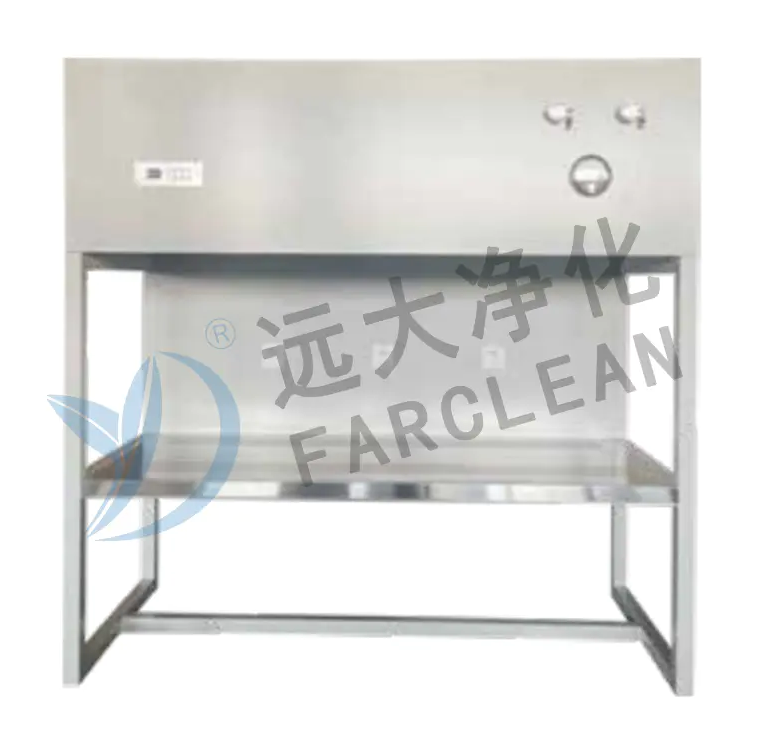
Vergleich der Clean-Bank-Typn
Die Wahl zwischen horizontalen und vertikalen Durchflussbänken sowie die Berücksichtigung von Alternativen zu Biosicherheitsschränken hängt von der Art der zu handhabenden Materialien ab.
| Type | Luftstromrichtung | Am besten geeignet für |
| Horizontale Reinigungsbank | Von hinten nach vorne | Ungefährlicher Proben- und Produktschutz |
| Reinraumbank mit vertikalem Durchfluss | Von oben nach unten | Allgemeine Verwendung im Labor, Gewebekultur |
| Biosicherheitsschrank (zum Vergleich) | Gefilterter Zu- und Abluft | Umgang mit infektiösen oder gefährlichen Materialien |
Es ist zu beachten, dass Reinstbänke zum Schutz des Produkts oder der Probe und nicht des Bedieners konzipiert sind, da der Luftstrom vor dem Austritt aus dem Schrank nicht vollständig eingedämmt oder gefiltert wird. Einrichtungen, die mit biologisch gefährlichen oder infektiösen Materialien arbeiten, sollten stattdessen eine Biosicherheitswerkbank verwenden und saubere Arbeitstische für Anwendungen reservieren, bei denen die Exposition des Bedieners kein Problem darstellt.
Praktische Faktoren, die bei der Auswahl einer sauberen Bank zu berücksichtigen sind
Bei der Auswahl der richtigen Reinraumbank müssen die Spezifikationen des Geräts an die beabsichtigte Anwendung und die Einschränkungen des Arbeitsbereichs angepasst werden. Die folgenden Faktoren sollten die Entscheidung leiten.
- Luftstromtyp, basierend darauf, ob der Schutz des Bedieners oder des Produkts im Vordergrund steht
- Erforderliche Arbeitsflächengröße zur Unterbringung der Ausrüstung und des Probenvolumens
- Zertifizierung und Austauschplan für HEPA-Filter
- Geräuschpegel, besonders wichtig für Gemeinschaftsräume oder kleine Laborräume
- Integrierte UV-Sterilisation für zusätzliche Dekontamination zwischen den Anwendungen
- Verfügbarer Platz auf der Werkbank und Deckenhöhe für die Installation
Aufrechterhaltung einer konstanten Leistung im Laufe der Zeit
Regelmäßige Wartung ist unerlässlich, um sicherzustellen, dass eine saubere Bank weiterhin die erwartete Leistung erbringt. HEPA-Filter sollten gemäß dem vom Hersteller empfohlenen Zeitplan überprüft und ausgetauscht werden, da ein verstopfter oder beschädigter Filter die Luftstromeffizienz verringert und die Partikelerfassung beeinträchtigt. Die Luftstromgeschwindigkeit sollte regelmäßig getestet und dokumentiert werden, insbesondere in regulierten Umgebungen wie pharmazeutischen oder medizinischen Labors, wo Zertifizierungsaufzeichnungen für Compliance-Audits erforderlich sein können. Das Sauberhalten der Arbeitsfläche und der Innenflächen zwischen den Einsätzen trägt auch dazu bei, die sterilen Bedingungen aufrechtzuerhalten, die das Gerät bieten soll.
Eine Reinraumbank bietet eine praktische und kostengünstige Möglichkeit, eine sterile Arbeitsumgebung für Forschungs-, Test- und Produktionsaufgaben einzurichten, die keine vollständigen Reinraumbedingungen erfordern. Durch das Verständnis der Unterschiede zwischen den Luftstromtypen, die Anpassung der Gerätespezifikationen an die beabsichtigte Anwendung und die ordnungsgemäße Wartung der Ausrüstung können sich Labore und Produktionsanlagen darauf verlassen, dass ihre Labore stets präzises, kontaminationsfreies Arbeiten ermöglichen.